
1. Background: Search Hits a 25-Year Milestone
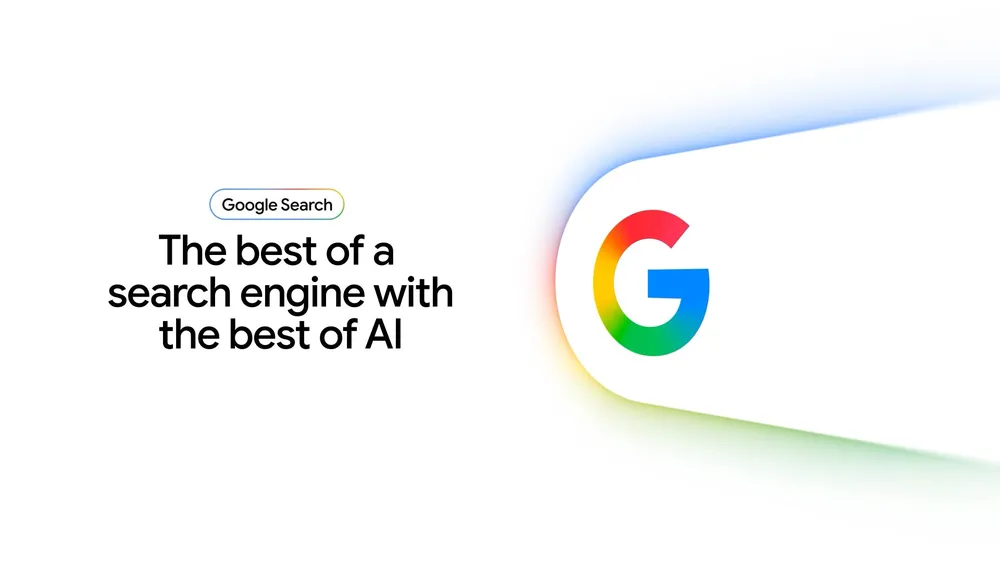
At I/O 2026, Google announced what it calls the biggest upgrade to Search in over 25 years. The headline isn’t a flashier result page . it’s agents inside Search. You ask a question in natural language, and instead of ten blue links, an agent takes action: booking, comparing, planning, or pulling live data across services.
In my experience, this is the exact pattern we’ve been wiring into our own RAG and agent pipelines for the last year . Google just made it mainstream at consumer scale.
2. Core Concepts: What Actually Changed
- Agentic Search: The query box now triggers multi-step agent execution, not just retrieval.
- An intelligent Search box: A new input surface that understands intent well enough to dispatch the right tool or agent.
- Model capability + Search: Advanced reasoning models are fused directly into the search stack, so the agent can plan before it acts.
3. Step-by-Step: How an Agentic Query Works
- Intent parsing: The model interprets your ask (e.g. “plan a 3-day trip under $800”).
- Planning: It decomposes the goal into sub-tasks and selects tools (flights, hotels, maps).
- Tool use: It calls those tools, handles failures, and retries . the same loop we build with function calling.
- Synthesis: Results are composed into a single answer you can act on.
4. Real-World Applications
- Travel & logistics: End-to-end planning instead of link-hunting.
- Shopping: “Find the best laptop under $1k with these specs” → agent compares and checks out.
- Dev workflows: Imagine asking Search to spin up a benchmark and return the table.
5. Advantages & Limitations
| Advantages | Limitations |
|---|---|
| Tasks complete in one step, not ten clicks | Agent errors are harder to spot than a wrong link |
| Lowers the skill floor for non-technical users | Trust, permissions, and safety rails are now critical |
| Reasoning model does the planning for you | Vendor lock-in to one agent ecosystem |
6. Best Practices for Engineers
- Design for verification: Every agent action should be inspectable and reversible.
- Use MCP-style tool contracts: Standardized tool interfaces make agents portable (MCP is the 2026 default).
- Plan before you act: A short reasoning step before tool calls cuts wasted calls and errors.
7. Future Trends
We’re moving from “chatbots that suggest” to “agents that execute.” As search engines absorb agent runtimes, the line between finding information and getting it done disappears. For builders, the takeaway is clear: agentic UX is now the default expectation, not a research demo.
8. Key Takeaways
- Search just became agent-native . a 25-year milestone.
- The same agent loop (parse → plan → tool use → synthesize) is what you should be building.
- Trust, safety, and tool standards (MCP) are the real engineering work ahead.
9. FAQ
Is this just a chatbot in Search?
No . it executes actions across tools, not just answers text.
Do I need to learn a new framework?
No. The underlying ideas (planning, tool use, RAG) are the same ones you already use; MCP is the emerging standard for tool contracts.
Read the source: Google’s official I/O 2026 Search announcement →